Trading in financial markets can be both rewarding and challenging. Having spent years successfully navigating this landscape, I’ve developed three fundamental rules that have proven invaluable in maintaining profitability over the long term. By adhering to these principles, traders can enhance their chances of success and build a sustainable trading career.
Rule 1: Only Enter Positions with a High Chance of Winning
Assessing Probability
The first and most crucial rule is to only enter trades that have a high probability of success. This principle is rooted in the understanding that not every trade will yield a profit, but with careful analysis, a trader can increase their likelihood of winning. Here are several strategies to identify high-probability trades:
- Back-Testing Strategies: Before placing a trade, it’s essential to analyze historical data to evaluate the performance of your trading strategy. Back-testing allows you to see how your approach would have fared in the past under various market conditions, helping you identify patterns and improve your strategy.
- Analyzing Historical Volatility: Understanding historical volatility is another key element in assessing trade opportunities. By calculating how much a stock or asset has moved in the past, you can gauge potential future movements. A lower historical volatility may indicate a more stable asset, while higher volatility can present both opportunities and risks.
- Utilizing Technical Indicators: Employing technical analysis tools, such as moving averages, Relative Strength Index (RSI), or Bollinger Bands, can help in identifying trends and potential entry points. These indicators can provide insights into market sentiment and potential reversals, guiding your decision-making process.
Combining Analysis with Discipline
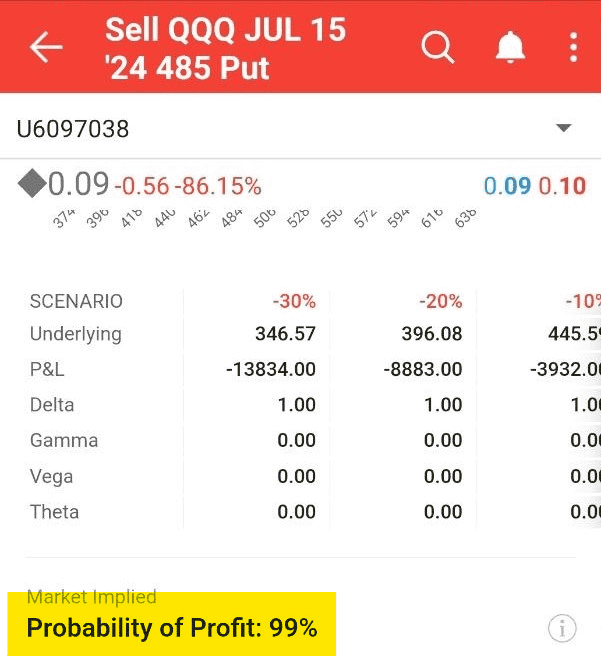
Even with a high probability of success, discipline is paramount. It’s easy to become emotional when trading, especially when tempted to jump into positions that do not meet your criteria. Stick to your analysis and resist the urge to deviate from your strategy.Tips. There are many free resources online to help determine the chance of winning. Example in Options trading many broker provide “Probability of Profit” for every Options contract.
Tips. There are many free resources online to help determine the chance of winning. Example in Options trading many broker provide “Probability of Profit” for every Options contract.
Rule 2: Compound Your Earnings
The Power of Compounding
Compounding is one of the most powerful concepts in trading. By reinvesting your profits, you can exponentially grow your trading balance over time. This principle emphasizes the importance of taking profits and moving on to other high-probability trades quickly.
- Quick Trades: At TradeRepeat, we typically hold trades for only a few days to a week. This short-term approach allows us to realize profits quickly and reinvest them into the next high-probability opportunity. By continuously compounding your earnings, even modest gains can snowball into significant returns over time.
- Setting Realistic Goals: While the allure of massive profits can be tempting, it’s crucial to set achievable targets. Aiming for consistent, smaller gains can often lead to more sustainable growth than chasing large, unpredictable profits.
- Maintaining a Trading Journal: Keeping a detailed trading journal can help track your performance and refine your strategy. By recording your trades, you can analyze what works and what doesn’t, allowing for continuous improvement and better compounding strategies.
Mindset for Success
Cultivating a mindset that values the compounding effect is essential. It requires patience and discipline to resist the urge to chase quick wins. Instead, focus on building a robust trading practice that prioritizes consistent, incremental growth.
At 2.5% a week, your balance will grow over 12x in 2 years

Rule 3: Set Your Stop Loss
The Importance of Risk Management
Even when entering trades with a high probability of success, there remains a possibility of adverse outcomes. This is where the implementation of strict stop-loss orders becomes critical. A well-defined stop-loss strategy can protect your trading capital and prevent devastating losses.
- Individual Trade Stop Loss: For each trade, set stop-loss orders based on key pivot points or support and resistance levels. These levels are crucial indicators that can help determine when a trade is no longer valid. Placing a stop-loss order effectively removes emotional decision-making during trades.
- Portfolio-Level Stop Loss: In addition to individual trades, it’s essential to establish a stop-loss strategy at the portfolio level. This means determining a percentage loss at which you will exit all positions to protect your overall account. By setting this threshold, you can mitigate the risk of catastrophic losses that could wipe out your capital.
- Adapting to Market Conditions: Your stop-loss strategy should also be flexible enough to adapt to changing market conditions. As volatility increases or market sentiment shifts, you may need to reassess your stop-loss levels to align with the new environment.
Building a Risk-Aware mindset
Setting stop-loss orders is not just a technical decision; it’s about fostering a culture of risk awareness. Every trader must understand that losses are a part of trading and that the goal is to manage those losses effectively to ensure long-term survival and profitability.
Conclusion: A Comprehensive Approach to Trading
In summary, successful trading hinges on the implementation of three essential rules: entering only high-probability trades, compounding your earnings, and setting strict stop-losses. By following these guidelines, traders can enhance their chances of achieving long-term profitability.
Creating a Sustainable Strategy
- Integration of Rules: Each of these rules complements the others. For instance, high-probability trades can lead to more frequent profits, which can then be compounded effectively while minimizing risk through stop-loss orders.
- Continuous Learning: The financial markets are constantly evolving, and it’s vital for traders to stay informed and adapt their strategies accordingly. Regularly revisiting your rules and strategies ensures they remain relevant and effective.
- Building a Support Network: Engaging with other traders and sharing experiences can provide valuable insights and foster a community of learning. Whether through forums, social media, or local trading groups, collaboration can enhance your understanding and execution of trading strategies.
By incorporating these principles into your trading routine, you can build a solid foundation for long-term success and profitability in the dynamic world of trading.